Table of Contents
Botulinum toxin type A in aesthetic medicine is widely used to temporarily reduce the appearance of certain facial expression lines. Its ability to influence muscle activity has made it an important subject in modern cosmetic dermatology and medical aesthetics. However, understanding its benefits requires equal attention to its mechanism of action, clinical limitations, and potential risks.
Although many people associate botulinum toxin with the brand name Botox, several prescription products contain different formulations of botulinum toxin type A. These products are not automatically interchangeable, and their approved indications may differ. Responsible aesthetic care therefore depends on understanding the specific product, the patient’s medical history, and the relevant regulatory requirements.
This educational guide explores how botulinum toxin type A works, its common aesthetic applications, and the benefits and safety considerations associated with treatment. It is intended to support informed learning rather than provide injection instructions. Anyone performing aesthetic procedures must have appropriate professional qualifications, practical training, and the ability to recognize and manage complications.
What Is Botulinum Toxin Type A in Aesthetic Medicine?
Botulinum toxin is a neurotoxic protein produced by the bacterium Clostridium botulinum. In carefully manufactured prescription medicines, purified botulinum toxin is used for specific medical and aesthetic indications. Type A is among the most widely studied forms used in cosmetic practice.
Its principal effect involves temporarily reducing communication between motor nerves and selected muscles. When administered appropriately by a qualified healthcare professional, this action can decrease the muscular contractions responsible for certain dynamic facial wrinkles.
Botulinum toxin is a prescription medicine, not an ordinary skincare ingredient. Its clinical use requires careful patient selection, appropriate product handling, informed consent, and compliance with applicable medical regulations.
Explore botulinum toxin type A in aesthetic medicine, including its uses, benefits, side effects, and safety considerations for informed aesthetic care.
How Does Botulinum Toxin Type A Work?
To understand the botulinum toxin mechanism of action, it is helpful to consider normal neuromuscular communication. Motor nerves release a neurotransmitter called acetylcholine at the neuromuscular junction. Acetylcholine activates receptors on muscle cells, initiating the processes that produce muscle contraction.
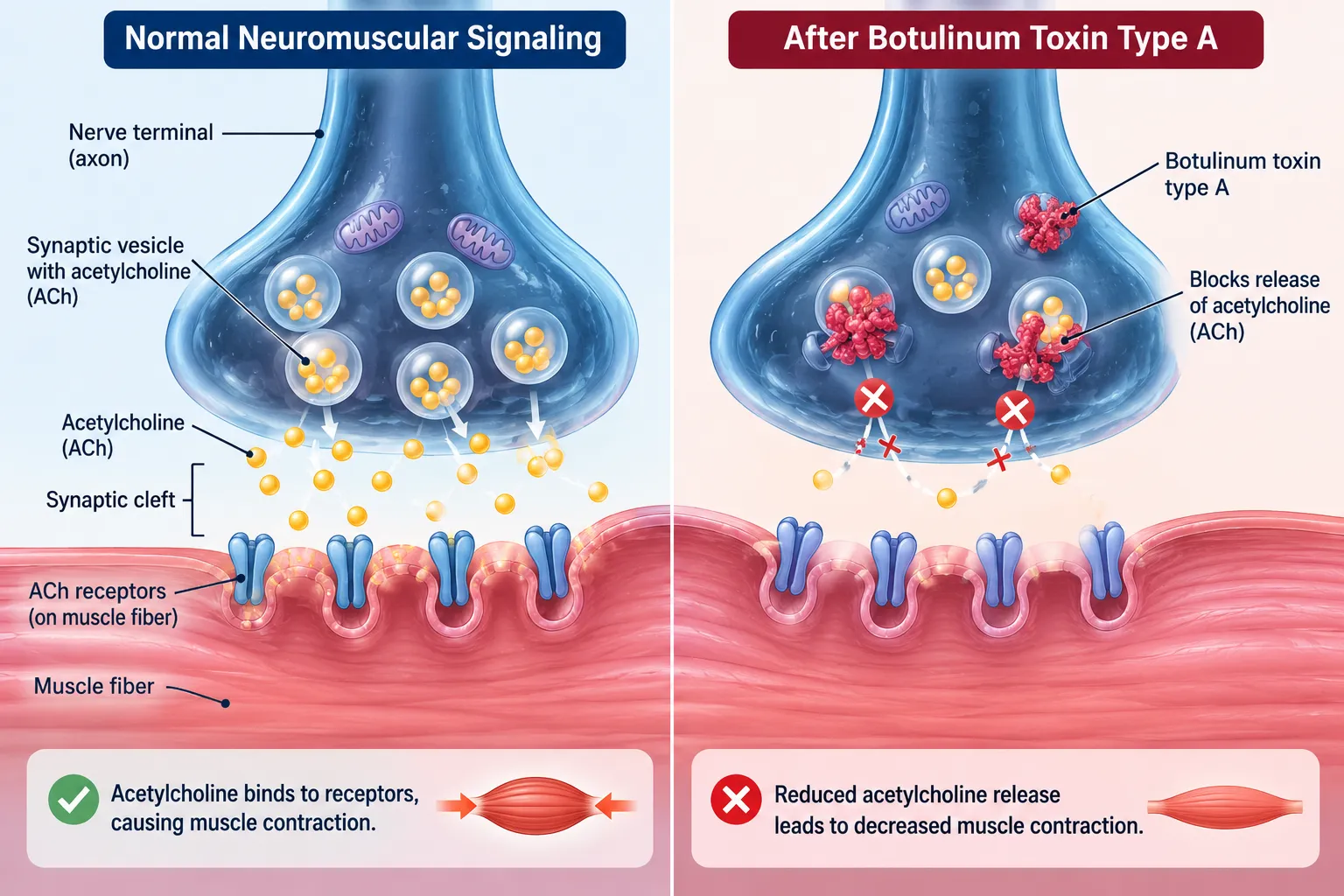
Botulinum toxin type A enters susceptible nerve terminals and interferes with the release of acetylcholine by cleaving SNAP-25, a protein involved in neurotransmitter release. As a result, the affected muscle receives less stimulation and its activity is temporarily reduced.
This effect is not immediate. Clinical improvement generally develops over several days, although onset and duration vary according to the product, treatment indication, and individual response.
The effect gradually diminishes as neuromuscular function recovers. For cosmetic facial lines, improvements commonly last approximately three to four months, although individual results and product-specific outcomes vary.
Botulinum Toxin Type A vs. Botox: Understanding the Difference
The terms botulinum toxin and Botox are often used interchangeably in everyday conversation, but they are not identical. Botulinum toxin type A refers to a category of neurotoxin-based medicines, while Botox Cosmetic is a specific commercial product containing onabotulinumtoxinA.
Other type A formulations include products containing abobotulinumtoxinA, incobotulinumtoxinA, prabotulinumtoxinA, and daxibotulinumtoxinA. Product availability and approved indications depend on the country and regulatory authority.
These formulations can differ in manufacturing processes, potency measurements, approved uses, and clinical characteristics. Importantly, potency units are product-specific and should not be treated as directly interchangeable.
Healthcare professionals studying botulinum toxin type A in aesthetic medicine should distinguish between a medicine’s generic identity, commercial brand, and approved prescribing information. This helps prevent misconceptions about equivalence and supports more informed clinical education.
Why Facial Anatomy Matters in Botulinum Toxin Treatments
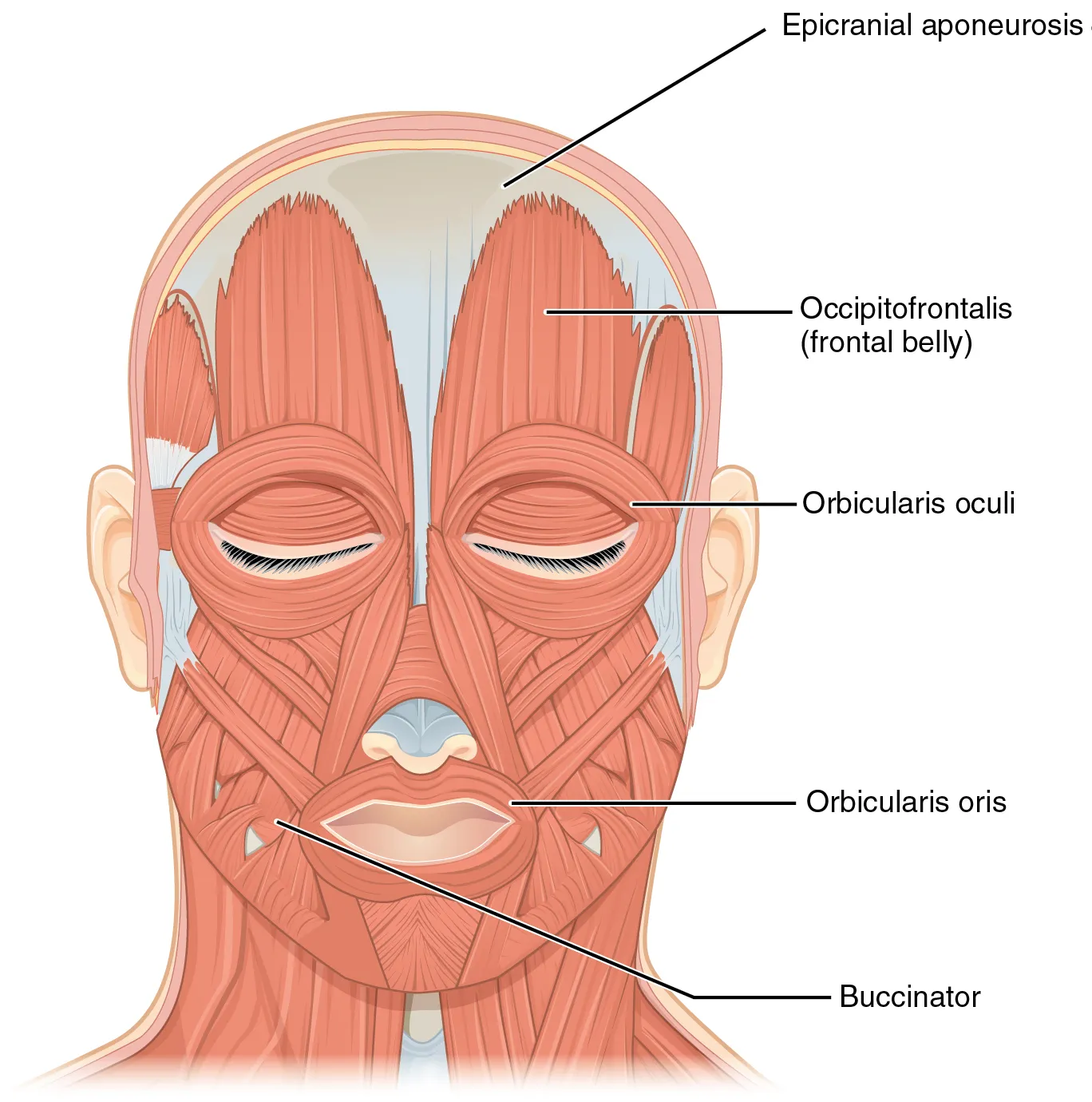
Successful aesthetic assessment requires understanding the muscles responsible for facial expression and their relationships with surrounding structures. The frontalis, corrugator supercilii, procerus, and orbicularis oculi are particularly relevant when studying common upper facial expression lines.
These muscles do not function independently. Eyebrow position, eyelid movement, and facial symmetry depend on coordinated muscular activity. Reducing the action of one muscle may influence the visible balance between neighboring muscle groups.
For this reason, facial anatomy knowledge is essential to professional training. Practitioners must understand normal anatomical variation, recognize existing asymmetries, and evaluate whether treatment is appropriate for an individual patient.
Students interested in developing a stronger anatomical foundation can explore relevant aesthetic medicine courses and educational resources that address facial muscles, neuromuscular function, and patient safety.
Common Uses of Botulinum Toxin Type A in Aesthetic Medicine
Common uses of botulinum toxin type A in aesthetic medicine include both established cosmetic indications and other applications that may be considered off-label, depending on the specific product and jurisdiction.
Not every wrinkle or facial concern responds equally to neuromodulator treatment. Lines associated primarily with skin damage, tissue volume changes, or structural aging may require a different assessment. Aesthetic treatment should therefore begin with identifying the anatomical cause of the patient’s concern.
Glabellar Lines Between the Eyebrows
Glabellar lines are the vertical or angled expression lines that appear between the eyebrows, particularly during frowning. They are associated with the activity of muscles including the corrugator supercilii and procerus.
Temporary reduction of selected muscle activity can soften the appearance of these lines in appropriately selected patients. Glabellar lines are among the established aesthetic indications for certain approved botulinum toxin type A products.
However, the appearance of the glabellar region is influenced by multiple factors, including skin quality, eyebrow position, and individual muscular anatomy. A comprehensive assessment should consider these relationships rather than focusing exclusively on the visible wrinkle.
Forehead Lines
Horizontal forehead lines commonly develop during eyebrow elevation and are strongly associated with frontalis muscle activity. Repeated facial movement, combined with changes in skin elasticity, can make these lines increasingly noticeable over time.
Botulinum toxin type A in aesthetic medicine may temporarily reduce the appearance of dynamic forehead lines in appropriately selected patients. However, the frontalis also contributes to normal eyebrow elevation, making functional assessment particularly important.
Patients should understand that cosmetic improvement must be balanced against the preservation of natural facial expression and eyelid-brow function. The suitability of treatment depends on individual anatomy and the product’s approved indications.
Crow’s Feet and Lateral Eye Lines
Crow’s feet are lines that appear near the outer corners of the eyes, often becoming more prominent during smiling or squinting. They are associated with contraction of the orbicularis oculi muscle and changes in the surrounding skin.
For suitable patients, certain botulinum toxin type A products are approved to temporarily improve the appearance of moderate to severe lateral canthal lines. Results depend on individual characteristics, treatment suitability, and professional assessment.
The periorbital region contains delicate anatomical structures involved in blinking, eyelid closure, and eye protection. This makes detailed anatomical knowledge and appropriate clinical training especially important.
Other Aesthetic Applications and Off-Label Uses
Additional applications of botulinum toxin type A in aesthetic medicine may involve selected concerns affecting the lower face, chin, jawline, and neck. Some of these uses may be off-label, meaning they are not specifically included in a product’s approved indications within a particular jurisdiction.
Off-label use should not be confused with an established regulatory approval. It requires careful consideration of available evidence, patient-specific risks, professional standards, and applicable legal requirements.
Not all facial changes are caused by muscle activity. For example, changes in facial volume, skin laxity, and skeletal support cannot be reliably corrected through muscle relaxation alone. Understanding these limitations helps support realistic expectations.
Benefits of Botulinum Toxin Type A for Facial Aesthetics
The potential benefits of botulinum toxin type A in aesthetic medicine primarily relate to temporary improvement in selected dynamic wrinkles. When used appropriately, the treatment can reduce excessive muscle activity while preserving a degree of natural facial movement.
However, outcomes are not identical for every patient. The degree of improvement depends on the product, the anatomical concern, individual muscle activity, skin characteristics, and clinical judgment.
Temporary Improvement in Dynamic Wrinkles
One of the main benefits of botulinum toxin type A is its ability to soften expression-related lines without permanently changing the underlying anatomy. This can be useful for individuals whose cosmetic concerns are closely associated with repetitive facial movement.
Because the effect is temporary, patients should understand that the appearance of treated lines may gradually return as muscle activity recovers. Maintenance treatment is not medically necessary for everyone and should be considered according to individual preferences and clinical suitability.
Minimally Invasive Treatment
Compared with surgical procedures, cosmetic botulinum toxin treatment is minimally invasive and is generally performed in an outpatient clinical setting. Many patients can resume ordinary activities relatively quickly, although individualized aftercare instructions and possible side effects must be considered.
Minimally invasive does not mean risk-free. Bruising, swelling, discomfort, temporary asymmetry, and unintended muscle weakness can occur. The potential for more serious complications reinforces the importance of appropriate medical supervision.
Individualized and Natural-Looking Outcomes
Facial expression is an important part of communication and personal identity. Aesthetic assessment should therefore consider the patient’s natural movement patterns, facial proportions, and desired appearance.
Professional treatment planning aims to balance cosmetic goals with normal function. Nevertheless, a natural-looking result cannot be guaranteed, and patients should receive realistic information about possible outcomes and limitations.
Evidence-Based Expectations and Treatment Duration
Botulinum toxin type A in aesthetic medicine has been studied extensively for selected cosmetic indications. Clinical evidence supports temporary improvement in certain expression-related facial lines, but treatment duration and effectiveness vary among individuals and products.
According to the American Academy of Dermatology’s guidance on botulinum toxin therapy, cosmetic improvements commonly last approximately three to four months, sometimes longer.
Patients and healthcare professionals should also consult the relevant product’s prescribing information for approved indications, contraindications, precautions, and potential adverse reactions.
For readers interested in broader medical aesthetics education, the educational blog provides a starting point for exploring related subjects such as facial anatomy, skin aging, and aesthetic treatment principles.
Finally, the U.S. Food and Drug Administration’s warning about unapproved botulinum toxin products highlights the importance of obtaining prescription medicines through authorized channels and receiving treatment from appropriately licensed professionals.
Botulinum toxin type A in aesthetic medicine offers meaningful benefits for selected patients, but these benefits must always be considered alongside treatment limitations, product-specific requirements, and potential risks. Understanding both effectiveness and safety is essential for responsible aesthetic practice.
1. What is botulinum toxin type A used for in aesthetic medicine?
Botulinum toxin type A in aesthetic medicine is primarily used to temporarily improve the appearance of certain facial expression lines. Common applications include glabellar lines between the eyebrows, horizontal forehead lines, and crow’s feet around the eyes. Approved indications vary by product and country. Other aesthetic applications may be considered off-label and require careful clinical assessment by qualified healthcare professionals.
2. How does botulinum toxin type A work?
Botulinum toxin type A works by temporarily inhibiting the release of acetylcholine, a neurotransmitter responsible for activating muscle contractions. This reduces activity in affected muscles and can soften dynamic wrinkles caused by repeated facial expressions. The effects are temporary because neuromuscular communication gradually recovers. Treatment outcomes depend on the specific formulation, individual anatomy, and clinical circumstances.
3. What are the main benefits of botulinum toxin type A?
The primary botulinum toxin aesthetic benefits include temporary improvement in selected dynamic facial wrinkles and a minimally invasive treatment approach. Many patients experience visible improvement without undergoing surgery. However, results vary, and treatment cannot address every cause of facial aging. Appropriate patient selection and realistic expectations are essential for satisfactory outcomes.
4. What are the possible side effects of botulinum toxin injections?
Common botulinum toxin side effects may include temporary pain, swelling, bruising, redness, or headache. Depending on the treatment area, some patients may experience eyelid drooping, eyebrow asymmetry, or unintended muscle weakness. Rare but serious complications can involve swallowing difficulties, breathing problems, or symptoms associated with the spread of toxin effects. These symptoms require urgent medical attention.
5. How long do botulinum toxin type A results last?
For many cosmetic applications, botulinum toxin type A results last approximately three to four months. However, duration varies depending on the product, treatment indication, individual response, and other clinical factors. Muscle activity gradually returns as the effects diminish. Patients considering further treatment should consult a qualified healthcare professional rather than assuming that repeated procedures are necessary.
6. What is the difference between botulinum toxin and dermal fillers?
Botulinum toxin and dermal fillers work through different mechanisms. Botulinum toxin temporarily reduces muscle activity, making it useful for selected expression-related wrinkles. Dermal fillers are injectable materials primarily used to restore or add volume and modify facial contours. Both treatments carry risks, and neither is suitable for every cosmetic concern. Understanding botulinum toxin vs dermal fillers helps patients recognize why individualized assessment matters.
7. Is botulinum toxin type A safe for cosmetic treatments?
Botulinum toxin type A has an established clinical evidence base for specific approved aesthetic indications, but no medical procedure is completely risk-free. Botulinum toxin treatment safety depends on appropriate patient selection, use of authorized products, professional qualifications, and adherence to product-specific prescribing information. Certain medical conditions, medication interactions, and other individual factors may affect suitability.
8. Who should avoid botulinum toxin type A treatments?
Botulinum toxin treatment may be inappropriate for individuals with known hypersensitivity to the product or infection at a proposed injection site. People with certain neuromuscular disorders may face increased risks. Safety information is also limited for some populations, including pregnant or breastfeeding individuals. A qualified healthcare professional should review medical history, medications, contraindications, and product-specific warnings before considering treatment.
Understanding the Risks and Complications of Botulinum Toxin Type A
Although botulinum toxin type A in aesthetic medicine has an established role in treating selected facial expression lines, it remains a prescription medicine with potential adverse effects. Understanding botulinum toxin risks and complications is essential for healthcare professionals and patients considering cosmetic procedures. The safety of botulinum toxin type A in aesthetic medicine depends on the specific product, individual medical circumstances, practitioner qualifications, and appropriate clinical care.
Most reported side effects of botulinum toxin type A in aesthetic medicine are temporary, but uncommon complications can be serious. A responsible discussion of treatment should distinguish expected local reactions from unintended muscle effects and symptoms that may indicate a medical emergency.
Common and Usually Temporary Side Effects
Local reactions may include mild pain, tenderness, swelling, redness, or bruising around the injection area. Some patients also report headaches. These effects often resolve without lasting consequences, although their frequency and duration vary between products, treatment areas, and individuals.
Patients should receive clear information about potential reactions before treatment. Persistent, worsening, or unexpected symptoms should be assessed by an appropriately qualified healthcare professional rather than automatically attributed to normal recovery.
Unintended Muscle Weakness and Facial Asymmetry
Because botulinum toxin affects neuromuscular communication, unwanted weakening of nearby muscles can alter facial appearance or function. Depending on the treatment area, complications may include eyelid drooping, eyebrow asymmetry, or changes in facial expression.
These outcomes may be temporary, but they can affect daily activities and patient satisfaction. Existing facial asymmetry, muscle function, and individual anatomical differences should therefore be considered during professional assessment.
Understanding facial muscles and their functional relationships is particularly important in aesthetic education. Clinicians should not assume that similar-looking facial lines always arise from identical patterns of muscular activity.
Rare but Serious Systemic Complications
Botulinum toxin products carry warnings concerning the possible spread of toxin effects beyond the injection site. Reported symptoms can include generalized muscle weakness, double vision, drooping eyelids, difficulty speaking, difficulty swallowing, and breathing problems. Such symptoms may develop hours to weeks after treatment.
Difficulty breathing, swallowing, or speaking following botulinum toxin exposure requires immediate emergency medical attention. Although severe systemic effects are uncommon in cosmetic practice, their potential seriousness must not be minimized.
The official BOTOX Cosmetic prescribing information provides detailed warnings, contraindications, adverse reactions, and product-specific safety information.
Contraindications and Patient-Specific Risk Factors
Not every patient is an appropriate candidate for botulinum toxin treatment. Product-specific contraindications include known hypersensitivity to relevant ingredients and infection at a proposed injection site. Certain neuromuscular disorders may increase susceptibility to clinically significant effects.
Medication history is also important. Some medicines that interfere with neuromuscular transmission may increase the effects of botulinum toxin. Pregnancy, breastfeeding, previous adverse reactions, and other medical circumstances require individualized consideration based on available evidence and prescribing guidance.
Professional assessment should identify relevant risks before any treatment decision. Patients should be encouraged to disclose their medical history and medications accurately, including prescription medicines, nonprescription products, and supplements.
Botulinum Toxin vs Dermal Fillers: Understanding the Differences
Botulinum toxin and dermal fillers are frequently discussed together because both are used in nonsurgical aesthetic medicine. However, their mechanisms, intended effects, and clinical risks differ. Understanding these distinctions helps explain why they are not interchangeable treatments.
Differences in Mechanism of Action
Botulinum toxin type A temporarily inhibits acetylcholine release at susceptible nerve terminals, reducing selected muscle activity. Its cosmetic applications primarily address dynamic lines associated with facial expression.
Dermal fillers, by contrast, are injectable materials used to add or restore volume, modify contours, or address certain folds. Different filler products have different compositions, physical properties, indications, and safety profiles.
A facial concern associated primarily with muscle movement may require a different assessment from one related to volume changes or tissue support. Neither category of treatment is universally suitable for all visible signs of aging.
Comparing Treatment Outcomes and Duration
Botulinum toxin effects generally develop over several days and often last approximately three to four months for common cosmetic indications. Dermal filler outcomes and duration vary considerably according to material, treatment location, and individual factors.
Some filler products produce relatively immediate changes in contour, while botulinum toxin primarily changes muscle activity over time. These differences affect patient expectations and the way clinicians evaluate treatment suitability.
Results from either approach are not guaranteed, and outcomes involving botulinum toxin type A in aesthetic medicine vary according to individual anatomy, product characteristics, and clinical assessment. A qualified healthcare professional should explain the likely benefits, limitations, and potential complications associated with the specific treatment under consideration.
Comparing Safety Considerations
Both botulinum toxin and dermal fillers can cause localized reactions such as swelling and bruising. However, their more serious complications differ because the products interact with tissues through different mechanisms.
Botulinum toxin can produce unintended muscle weakness and, rarely, symptoms associated with distant spread of toxin effects. Dermal fillers can cause vascular occlusion, potentially resulting in tissue injury, vision loss, or other severe complications.
Neither treatment should be selected solely because it is popular or minimally invasive. Patient safety requires individualized assessment, authorized products, appropriate professional training, and informed consent.
Best Practices for Safe Botulinum Toxin Treatment
The safety of botulinum toxin type A in aesthetic medicine depends on a comprehensive clinical process rather than a single technical decision. technical decision. Effective risk management includes medical assessment, professional competence, product authenticity, patient communication, and the ability to recognize complications.
Choose an Appropriately Qualified Healthcare Professional
Botulinum toxin injections are medical procedures. Patients should seek appropriately licensed healthcare professionals with relevant anatomical knowledge, clinical training, and experience in aesthetic medicine.
Professional qualifications and permitted scope of practice vary between jurisdictions. Patients should verify that the practitioner is authorized to provide the proposed treatment and that the clinical environment meets applicable medical standards.
Prioritize Comprehensive Patient Assessment
Aesthetic assessment should include the patient’s goals, relevant medical history, current medications, previous cosmetic procedures, and examination of facial movement. These factors can influence whether treatment is appropriate and what limitations should be discussed.
Existing asymmetry, eyelid function, and other anatomical characteristics may affect the evaluation. A consultation should also consider whether the patient’s expectations are realistic and whether an alternative approach may be more appropriate.
Use Authorized Products and Reliable Supply Chains
Authenticity and proper sourcing are critical components of botulinum toxin treatment safety. Counterfeit, unapproved, or improperly handled products may expose patients to significant risks.
Prescription products should be obtained through authorized channels and handled according to their specific requirements. Healthcare professionals must follow applicable regulations and manufacturer instructions rather than assuming all botulinum toxin formulations are equivalent.
The U.S. Food and Drug Administration’s warning about illegally marketed botulinum toxin products emphasizes the risks associated with unapproved and misbranded medicines.
Explain Benefits, Limitations, and Possible Complications
Informed consent requires more than obtaining a signature. Patients should understand the proposed treatment, expected benefits, temporary nature of results, possible adverse effects, and available alternatives.
Communication should be clear and balanced. Descriptions such as completely safe, permanent, or guaranteed should be avoided because they can create unrealistic expectations and obscure clinically important limitations.
Maintain Appropriate Clinical Documentation
Professional documentation supports continuity of care and responsible medical practice. Relevant records may include medical assessment, consent, the product used, clinical observations, and any adverse reactions or follow-up concerns.
Documentation practices must comply with applicable healthcare regulations and privacy requirements. Clear records can support patient communication, quality improvement, and appropriate evaluation if unexpected symptoms occur.
Common Mistakes in Botulinum Toxin Aesthetic Practice
Understanding common misconceptions about botulinum toxin type A in aesthetic medicine is valuable for students, healthcare professionals, and patients. Some mistakes arise from oversimplifying facial anatomy, while others involve unrealistic expectations or inadequate attention to product-specific information.
Assuming All Botulinum Toxin Products Are Interchangeable
Different botulinum toxin type A formulations may vary in manufacturing, potency measurements, approved indications, and prescribing requirements. Units of biological activity are product-specific and cannot simply be converted from one formulation to another.
Educational resources should identify the specific formulation being discussed whenever product-specific claims are made. This distinction is essential for accurate clinical understanding.
Ignoring Individual Facial Anatomy
Facial anatomy differs between patients. Variations in muscle activity, eyebrow position, facial proportions, and previous procedures can influence assessment and outcomes.
Using a simplified approach that disregards individual anatomy may contribute to unsatisfactory results or unintended functional changes. Clinical decision-making should be based on appropriate examination rather than assumptions drawn from generic diagrams.
Overpromising Results
Botulinum toxin type A does not reverse every aspect of facial aging. It primarily influences selected muscle-related concerns and cannot directly replace lost facial volume or restore all changes in skin quality.
Promotional claims suggesting permanent wrinkle removal or identical outcomes for every patient are misleading. Responsible patient education should explain that results vary and that treatment effects gradually diminish.
Underestimating Medical Risks
Although cosmetic injections are often brief outpatient procedures, their medical risks deserve serious attention. Inadequate patient assessment, use of unauthorized products, or failure to recognize warning symptoms may increase the likelihood or consequences of complications.
Healthcare professionals must be prepared to identify adverse reactions and arrange appropriate medical care. Serious symptoms involving breathing, swallowing, or speech require emergency assessment.
Confusing Online Learning With Clinical Qualification
Online educational resources can provide valuable theoretical knowledge about botulinum toxin, facial anatomy, and patient safety. However, reading articles or completing introductory courses does not independently establish competence to perform injections.
Practical clinical skills require appropriate professional qualifications, supervised education, competency assessment, and compliance with local regulations.
Healthcare professionals seeking further education can review available aesthetic medicine courses and evaluate their curricula, prerequisites, and practical training components before enrolling.
How Much Does Botulinum Toxin Type A Treatment Cost?
The cost of botulinum toxin type A in aesthetic medicine varies according to geographic location, clinical provider, product selection, treatment indication, and individual requirements. Consequently, there is no single reliable price that applies to every patient or treatment.
Published prices may also use different pricing methods. Some providers describe costs by treatment area, while others use product-specific units or individualized treatment plans. These approaches can make direct comparisons difficult.
Factors That Influence Treatment Pricing
Practitioner qualifications, clinic operating costs, product authenticity, regional market conditions, and the complexity of the clinical assessment may all influence the final price.
Patients should understand what a quoted price includes, whether follow-up assessment is available, and which product is being considered. The lowest advertised price is not necessarily the safest or most appropriate option.
Considering Long-Term Costs
Because cosmetic botulinum toxin effects are temporary, individuals who choose to maintain their results may consider additional treatments over time. However, repeat treatment is a personal and clinical decision rather than an automatic requirement.
Long-term cost considerations should account for treatment frequency, individual response, and changing aesthetic goals. Patients should avoid committing to repeated procedures without understanding the expected benefits and potential risks.
Evaluating the Cost of Professional Education
For healthcare professionals, educational expenses are separate from patient treatment costs. Training fees may depend on course duration, instructor qualifications, educational resources, and whether supervised practical components are included.
When comparing educational programs, learners should prioritize curriculum quality, anatomical accuracy, patient safety, and suitability for their professional qualifications rather than selecting a course solely on price.
What Patients Should Expect After Botulinum Toxin Treatment
Understanding recovery expectations is an important part of patient education about botulinum toxin type A in aesthetic medicine. Although cosmetic injections are generally performed in outpatient settings, patients should receive individualized guidance about possible short-term reactions and when to seek medical advice.
Mild redness, swelling, tenderness, or bruising may occur around the treated area. Visible cosmetic effects usually develop gradually rather than immediately, and the timing of results varies by product and individual response. Patients should follow the aftercare instructions provided by their qualified healthcare professional.
Patients should also understand that temporary improvement does not guarantee complete wrinkle removal or identical results across treatment sessions. Any unexpected weakness, changes in vision, or other concerning symptoms should be evaluated promptly. Difficulty breathing, swallowing, or speaking requires emergency medical attention.
Conclusion: Understanding Botulinum Toxin Type A in Aesthetic Medicine
Botulinum toxin type A in aesthetic medicine is an established option for temporarily improving selected facial expression lines. Its effects on neuromuscular communication provide the basis for cosmetic applications involving dynamic wrinkles, particularly in the upper face.
However, potential benefits must always be evaluated alongside limitations, contraindications, and possible complications. Different products have distinct prescribing information, and treatment outcomes depend on individual anatomy, medical circumstances, and professional assessment.
Responsible aesthetic medicine requires evidence-based education, appropriate clinical qualifications, informed consent, and a strong commitment to patient safety. Understanding the difference between expected treatment effects and potential adverse reactions is an important part of professional learning.
For patients, the most appropriate next step is consultation with a qualified healthcare professional who can assess individual suitability and explain realistic expectations. For healthcare professionals, continued anatomical and pharmacological education supports more informed clinical practice.
Continue Your Aesthetic Medicine Education: Explore our educational courses to learn more about available training opportunities, or contact us for information about course content and enrollment requirements.